 Auction
 The Role of Refurbished IT Assets in Reducing Carbon Footprint
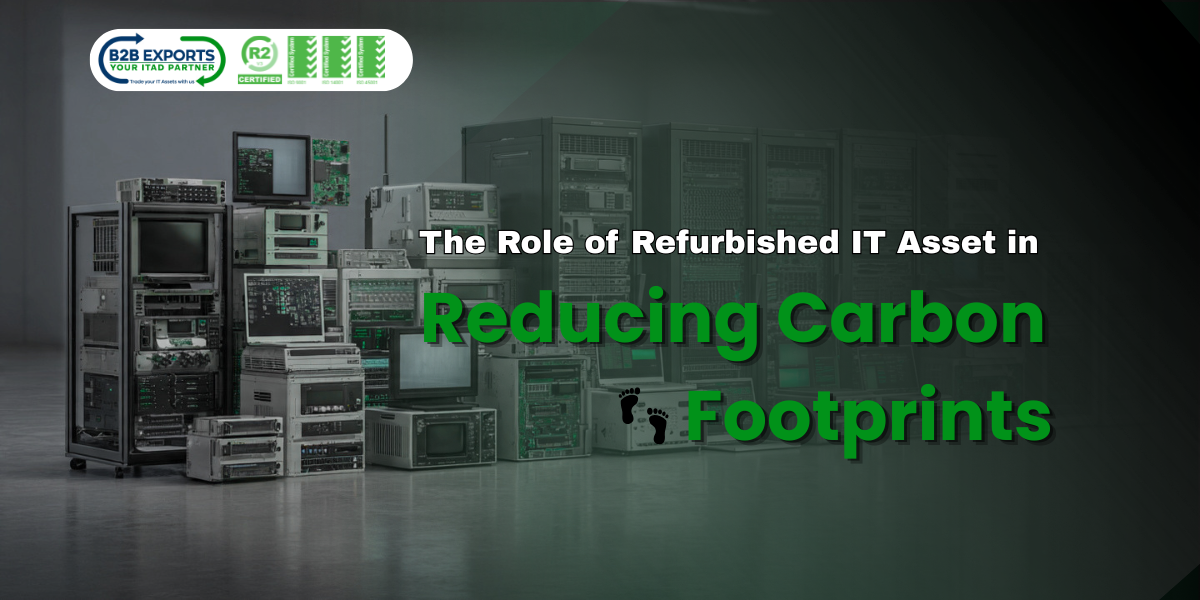
The world produces huge quantities of electronic waste and a large portion of that is said to come from corporate IT environments. This indicates retired servers, replaced laptops, decommissioned networking equipment and storage devices that are swapped out long before they’ve reached the end of their usable life.
For enterprises, data centers and cloud providers, this constant refresh cycle isn’t just costly. It also creates a growing environmental burden that often goes unnoticed. Perfectly functional hardware ends up sitting idle in storage rooms or getting discarded, while new equipment is manufactured to replace it, adding more emissions, more waste and more pressure on natural resources.
But this is beginning to change, as more organizations are reconsidering what “end-of-life” really means for IT equipment. Rather than ditching hardware after one use, they’re opting to refurbish it and redeploy it. Not only does increasing the lifespan of this equipment help save money, but to an even larger degree it can also mitigate the impact that IT operations can have on the world around us.
IT asset refurbishment is working to help with more than just lowering procurement costs. Extending the life of IT hardware means fewer devices need to be manufactured, reducing the heavy emissions and resource use that go into manufacturing. It also produces less electronic waste, extends the life of valuable materials and contributes to circular economy efforts.
The Hidden Carbon Cost of New IT Hardware
Before taking a look at the advantages of refurbishment, it is helpful to understand what organizations avoid when they use refurbished equipment instead of new. The manufacturing of commonly used IT hardware has a greater impact than many realize.
Building a server requires significant quantities of rare earth elements, along with industrial metals and plastic metals. The sourcing, refining and movement of these materials release significant greenhouse gas emissions, even before the device is assembled. Research across the technology sector suggests that a significant portion of a device’s lifetime carbon footprint is created during manufacturing, rather than during everyday use. This is commonly referred to as embodied carbon, that indicates emissions associated with a product before it is ever switched on.
When an organization takes the decision of purchasing a new server or laptop instead of a refurbished one, it thereby triggers the demand for that entire manufacturing cycle again. When this is repeated across the hundreds or even thousands of devices in an enterprise environment, the cumulative environmental impact grows significantly. For large organizations and data centers that refresh hardware on scheduled cycles, the embodied carbon generated through repeated new purchases forms a significant and often overlooked part of their overall footprint.
IT asset refurbishment helps break this cycle. By restoring and redeploying existing hardware, organizations reduce the need for additional manufacturing. The embodied carbon has already been incurred and extending the device’s life spreads that impact over a longer period. This lowers the annual environmental cost per asset. Studies within the electronics refurbishment sector indicate that reusing IT equipment instead of manufacturing new equivalents can help in reducing associated carbon emissions by as much as around 70 to 80 percent.
The Role of ITAD in End-of-Life Asset Management
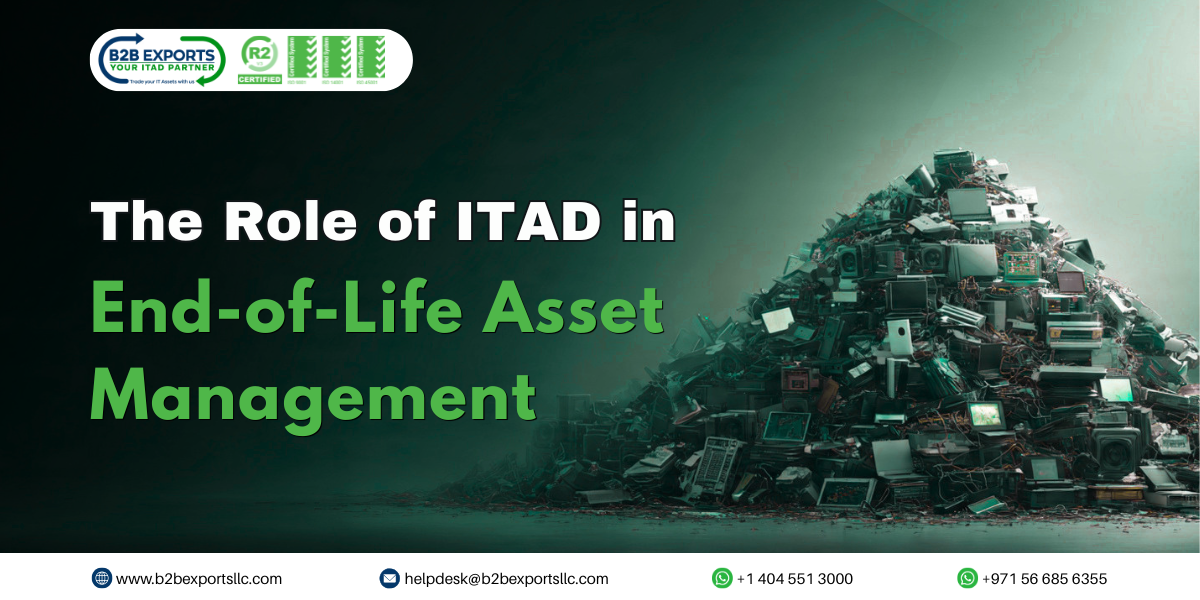
No discussion about sustainable IT hardware is going to be considered complete without considering what happens to assets that can no longer be refurbished. This is where having a clear and thoughtful way to handle end-of-life IT assets through efficient IT asset disposition really makes a difference.
1. Addressing Data Security while Minimizing Waste
When hardware reaches the ITAD stage, data storage becomes one of the most sensitive aspects. Hard drive disposal, in particular, must balance data security with responsibility toward the environment. Improper disposal, especially physical destruction used by default, creates unnecessary waste and removes any possibility of reuse. A more practical alternative is certified data erasure as it securely wipes the data while keeping the drive usable, so it can be redeployed internally or remarketed. This way, you’re not only meeting compliance requirements but also reducing waste and getting more value out of your assets.
2. Value of a Certified Data Erasure over Default Destruction
For data centers and enterprises dealing with large volumes of storage media, choosing certified data erasure instead of automatically destroying everything can make a real difference. It does take some coordination between IT, security and sustainability teams, but the payoff is worth it. Organizations that take this route often recover more value from their assets while also cutting down on waste and emissions. When done right, ITAD moves beyond just ticking compliance boxes and starts playing a meaningful role in reducing carbon impact and handling IT assets more responsibly.
3. Making ITAD Part of a Bigger Sustainability Strategy
Taking an adequate shift often needs coordination between IT, security and sustainability teams, but organizations that adopt this approach frequently see improved asset recovery rates and reduced environmental impact. When implemented properly, ITAD is not just a compliance requirement, it becomes an active contributor to lowering carbon footprint and managing IT assets responsibly.
Key Environmental Benefits of IT Asset Refurbishment at a Glance
When organizations look at how IT asset refurbishment can support their sustainability goals, the environmental benefits are quite practical and easy to see. It is less about obligation and more about using current technology in a smarter as well as efficient way. Refurbishment offers a way to reduce waste, cut down on resource use and still get value from existing ones.
1. Lowering the Volume of E-Waste
Returned assets, when refurbished and returned into service never make it into the waste stream. This in turn decreases the amount of hazardous materials, including lead, mercury and flame retardants, that would otherwise end up in landfills or go through energy-intensive recycling processes. This prevents all the waste from piling up by extending a device's life.
2. Reduced Manufacturing Demand
Every refurbished device that is used as a replacement of a new purchase reduces pressure on global electronics manufacturing. This means fewer raw materials are being extracted, lower energy is used in production facilities and reduced emissions from shipping and logistics. Over time, this can greatly reduce the environmental footprint of technology procurement.
3. Circular Economy Participation
IT asset refurbishment is a practical example of ensuring that technology can be kept in use for more durations rather than just letting it go into waste. Instead of following the approach of just “buying, using, discarding,” organizations move toward a “buying, using, refurbishing, reusing” cycle. This results in extending the life of each device and helps in increasing the value which is extracted from existing hardware while decreasing the impact on the environment.
4. Support for Scope 3 Emissions Reporting
As sustainability reporting evolves, scope 3 emissions from purchased goods and services are receiving greater attention. Refurbishment initiatives help in reducing these emissions by decreasing reliance on newly manufactured products and the impact can be documented within sustainability reporting frameworks.
5. Improving Data Center Efficiency with Appropriately Sized Systems
Refurbished enterprise hardware, particularly servers and networking equipment, is often deployed in secondary or edge environments where the highest performance levels are not required. Using appropriately specified refurbished equipment in these scenarios helps in avoiding unnecessary consumption of energy that is associated with overpowered new systems, improving overall infrastructure efficiency.
6. Expanding IT Facility through Refurbished IT Assets
Refurbishment also provides IT teams enhanced flexibility in planning and using their infrastructure. Refurbished assets can be leveraged for testing environments, backup capacity or temporary projects or edge deployments where top-tier performance is not a requirement. This helps older, fully functional equipment not lie unused in storage cabinets and ensures legacy devices continue delivering value. With time, increased utilization decreases wasteful purchases, enabling them to build a more efficient IT landscape as they also drive toward their sustainability targets.
Building a Refurbishment-First Approach: What Enterprise IT Leaders Should Do Now
Understanding the environment related benefits of IT asset refurbishment is one step and turning that understanding into an organizational strategy requires coordinated planning across procurement, asset management, security as well as sustainability teams. The following plan provides proper guidance for enterprise IT leaders who are willing to start putting their ideas into practical steps ahead.
1. Conduct Audit for Asset Lifecycle
The starting point is visibility. Organizations cannot optimize what they cannot clearly track. A comprehensive IT asset management audit helps identify active and retiring equipment, including performance, capability and remaining useful life. This assessment provides the basis for determining which devices can be refurbished, which can be remarketed and which have truly reached the end-of-life.
2. Establishing a Refurbishment-focused Policy for Procurement
Rather than automatically opting for totally new hardware for every need, procurement teams can consider certified refurbished equipment as it is a practical option in situations where the latest generation performance is not strictly required.
3. Engage Certified Providers for ITAD and Refurbishment
Refurbishment quality varies a lot, making partner selection greatly important. Organizations should work with providers holding recognized certifications such as R2v3 or e-stewards, which are known for properly defining the standards for security, operations as well as environment. Partners that are certified also provide documented chain-of-custody records that support compliance and sustainability reporting.
4. Measure Environmental Impact within IT Asset Reporting
IT teams can start keeping a track of practical, meaningful metrics such as the number of refurbished assets, how much carbon is saved and what share of equipment is kept out of disposal altogether. This kind of data gives sustainability teams something concrete to report in ESG disclosures metrics, provides them with tangible data for ESG disclosures and makes it easier to show the real value of continuing refurbishment efforts.
5. Align Hard Drive Disposal Practices with Security and Sustainability Goals
As part of a refurbishment-focused approach, organizations should define data destruction policies that give priority to certified data erasure above physical destruction whenever security requirements allow. This preserves reuse potential, prevents unessential wastage and ensures that the data is managed as per the security and privacy requirements.
Conclusion: Refurbishment Is Becoming a Key Part of Sustainable IT Operations
The discussion that takes place regarding enterprise sustainability has changed a lot in recent times. Organizations are now expected to move ahead of broad commitments and demonstrate real operational changes. IT asset refurbishment provides a practical, measurable and immediately actionable step that sustainability-focused businesses can implement today.
For CIOs, refurbishment helps in extending the value of existing investments while also results in lowering procurement related costs. For sustainability teams, it supports measurable reductions in carbon emissions across the entire lifecycle of technology. For compliance leaders, it helps in aligning IT operations with expanding environmental regulations related to electronics management. For data center operators, it provides a more responsible way to upgrade or replace hardware without contributing to the massive challenge of electronic waste.
Organizations that lead in sustainability are not waiting for ideal conditions or future innovations. They are making practical adjustments to how they procure, use, manage and retire IT assets right now. IT asset refurbishment is not a temporary solution, it is a strategic decision that supports environmental responsibility, financial efficiency and operational stability. The real question is no longer whether organizations should prioritize it, but whether they can afford to overlook it. Early adopters don’t just lower their environmental impact, they also put in place stronger, more adaptable IT strategies that hold up better over time.