 Auction
 Why are IT Asset Destruction Services Essential
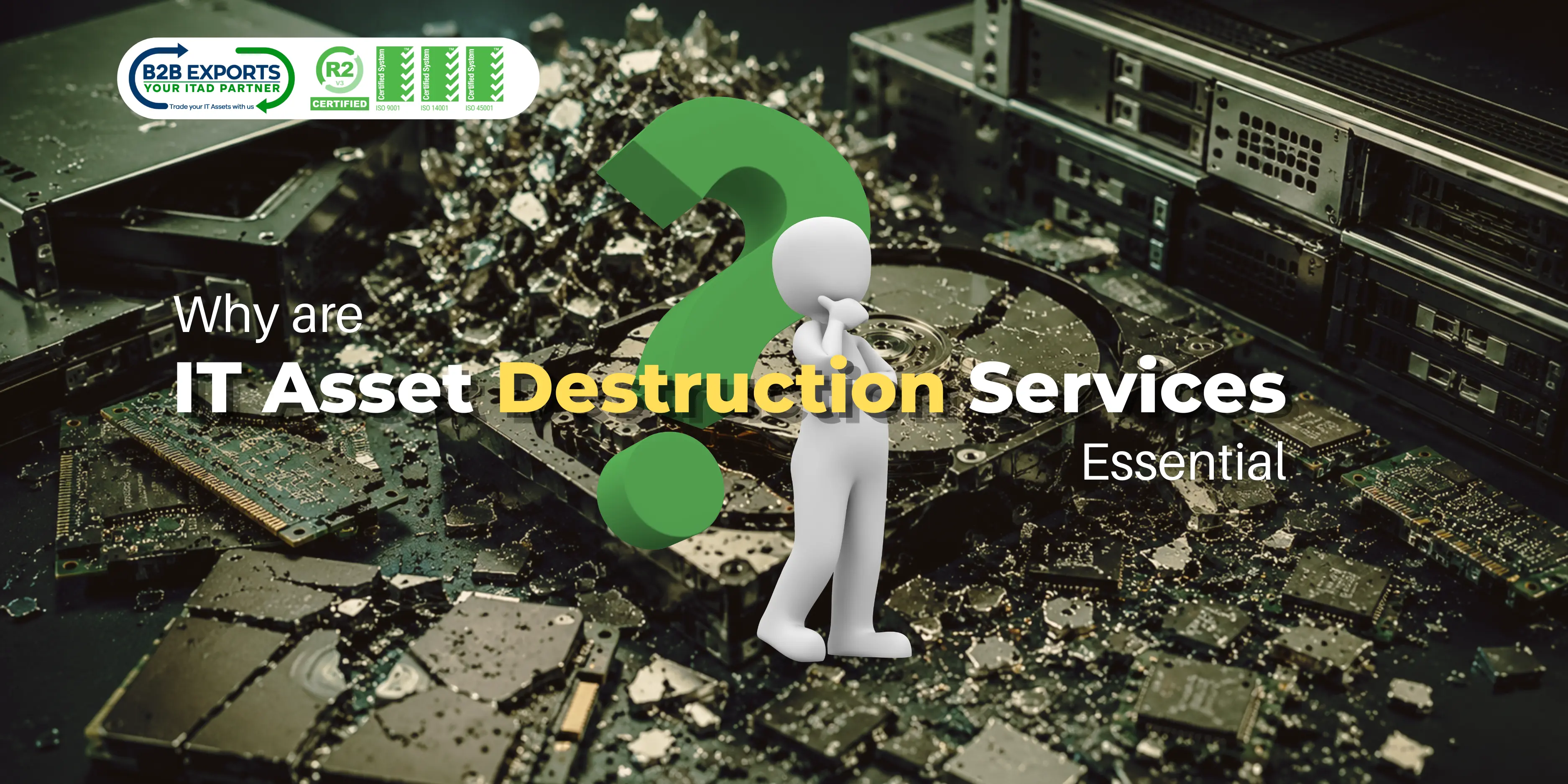
Today, businesses upgrade their technology to stay updated with the changing business environment. Old and obsolete IT assets must be retired safely at the end of their journey. IT assets hold an organization’s valuable information, even if they become old and appear harmless. During retirement, the major concern is that sensitive data should not be compromised. For organisations working with hundreds or thousands of devices, data protection is not limited to deleting files or formatting hard drives. From business documents and customer information to employee records and confidential data, the retired hardware can carry every detail. Thus, professional IT asset destruction services are necessary to ensure security, goodwill and meet regulatory compliance.
It has become a must for organizations to permanently remove the data from their retired hardware while being environmentally compliant. To do so, there are IT Asset Destruction Services that offer secure, certified methods. These methods move beyond simply deleting the data and focus on physical destruction of IT assets, data wiping with certifications and complete documentation. As a result, the organizations will be protected from data breaches, regulatory penalties and any damage to their reputation. Data protection regulations are becoming stricter as cyberattacks continue to evolve. Due to such threats, the need of the hour is to choose the right IT asset destruction company.
Key Role of IT Asset Destruction Services
As part of IT asset disposition, IT asset destruction services aim to dispose of retired hardware. These services ensure that IT assets are responsibly handled and data is properly removed before they are discarded. Organisations that use professional asset destruction can meet the highest security standards while fulfilling their environmental responsibilities. Therefore, this approach is more than simple disposal or recycling.The data must be absolutely unrecoverable before the organisation loses custody over its assets. The said principle applies to every retired hardware, whether it undergoes recycling, remarketing or physical destruction. Sometimes, the hardware that is wiped and cleaned can also create potential risks. This includes data recovery using advanced tools in the absence of proper protocols for asset destruction. Organizations need to understand such risks and adopt several layers of security. This is why professional IT asset destruction companies are becoming more important for complete data sanitization.
Diverse tech instruments are present in a data centre, requiring different destruction methods. It includes everything, ranging from hard drives and mobile devices to networking equipment and specialized hardware. For instance, methods such as degaussing or physical shredding may be required for hard drives, while cryptographic erasures are used for solid-state drives. Hence, the procedures can vary because of their different storage mechanisms. Improper asset destruction causes damage in addition to immediate data breaches. If regulatory expectations are not met according to the industrial standards, companies may face legal penalties. Organisations can also lose their reputation when data is leaked through improper disposal of assets. A single failure can cause more expenditure than the investment in IT asset destruction services. Adopting proper destruction is not just a security measure, but a significant investment for businesses.
Data Destruction Methods and Security Standards
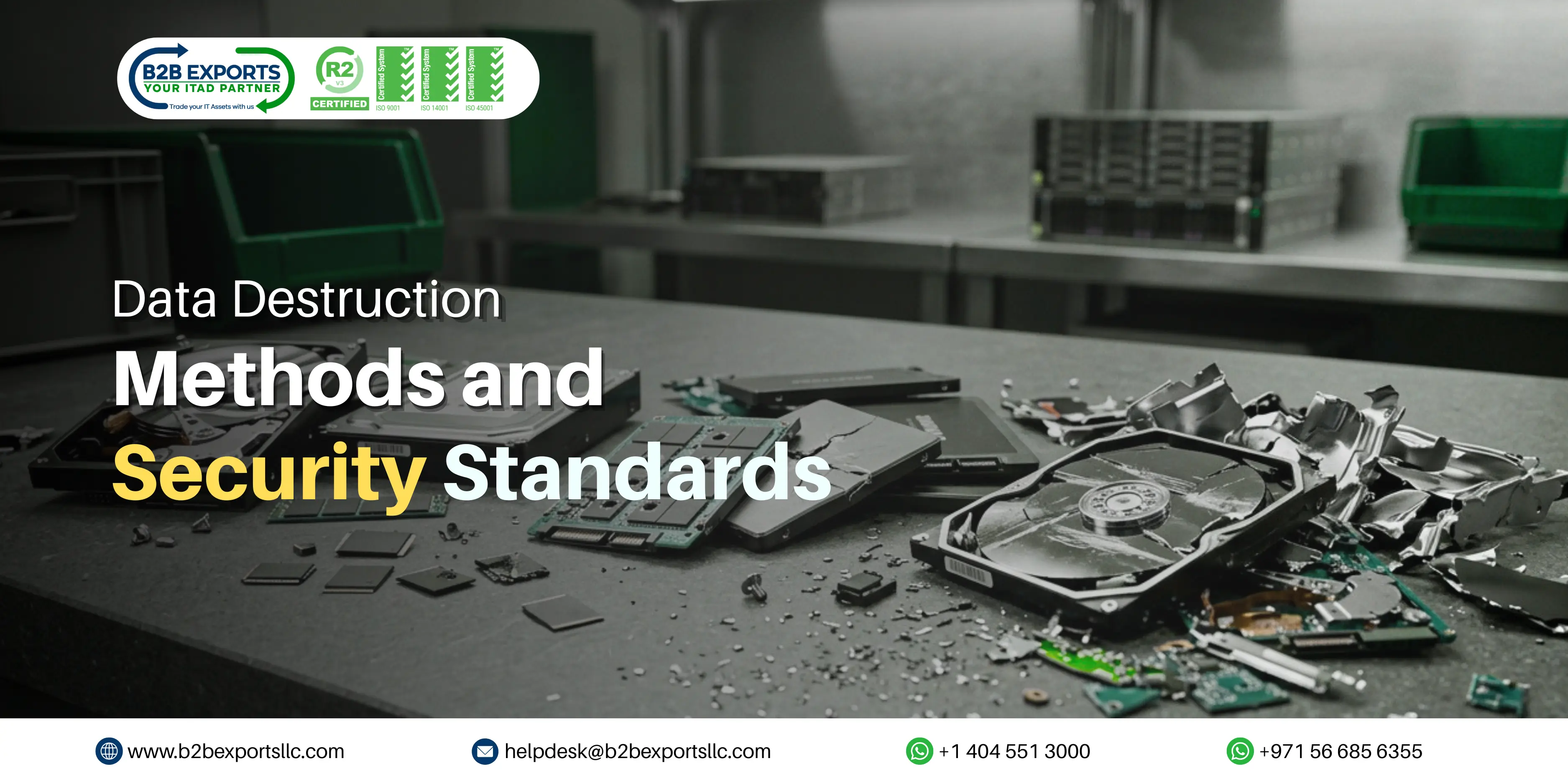
Several methods are used in data destruction services. Every procedure is designed for different security requirements and device types. Understanding and following the proper process helps in making responsible decisions for an efficient asset destruction strategy. Data destruction is generally performed through hardware destruction, degaussing, encryption-based deletion and approved data wiping methods. Every method has different advantages in different situations, depending on the requirements. The best method is chosen for the organization that suits the IT asset and meets the security needs.
Physical Destruction
Among all methods, physical destruction can give certain results for data elimination. It is completely impossible to recover data when devices such as hard drives, SSDs or any other storage media are shredded into smaller pieces. In simpler terms, physical destruction of devices means they are turned into small particles measuring a few millimeters. Performing professional shredding operations ensures that even the most advanced techniques cannot restore the data. Shredding is of great importance for highly sensitive and valuable information. This method gives certainty to organisations that their valuable data cannot be restored.
Degaussing
Degaussing is another good option for magnetic media. In this approach, strong magnetic forces are applied to remove data from the storage surfaces of hard drives. The limitation of this process is that it only works with magnetic storage media and does not work with solid-state drives. Working with an IT asset destruction company helps organisations to gain an understanding of the technical differences and their applications.
Certified Data Wiping
Under IT asset disposal services, the equipment may be prepared for recycling or donation. For this to happen, certified data wiping ensures responsible sanitization and maintains the device’s functionality. It restricts data recovery by overwriting each storage area multiple times using complex patterns. Professional services for data wiping not only help meet these standards but also offer certifications to every processed device.
R2V3 Security Standards
A company’s commitment to data security and responsible recycling of electronics increases with certification under R2V3 standards. Along with data destruction protocols, organisations need to maintain documentation for asset custody and sustainable practices as a part of the R2V3 standards. This certification shows professional capability and dedication in security and sustainability. Thus, it can help make a more informed decision when selecting an IT asset company. Regular audits are conducted, which help to verify the processes of certified companies. It assures the organisations that their asset destruction will follow industry best practices.
Importance of Data Center Decommissioning
Secure IT Asset Destruction requires addressing one of the most complex challenges of Data Center Decommissioning. The process of decommissioning is essential when organisations close their data centers, combine facilities or migrate to cloud infrastructure. During such times, organisations must ensure the responsible removal and destruction of thousands of their devices. Organized planning, specialized expertise and security protocols help avoid data exposures and ensure a smooth transition period.
Organizations can coordinate every aspect of the shutdown process by seeking professional data center decommissioning services. It begins with asset inventorying and is followed by data wiping or destruction. Thus, decommissioning ensures the secure removal of the equipment and complete documentation. Operational data centers can be even more complex, where a few systems continue to run while others undergo decommissioning. IT asset destruction companies aim to maintain safety by overcoming these challenges and preventing any business disruptions.
When it comes to the physical logistics in a data center shutdown, specialized equipment and well-trained staff become necessary. Protection of facilities against damage and work safety requires professional assistance. This expertise ensures a smooth removal of hardware, including networking equipment, backup power systems and related equipment. The transition is possible if there is strong coordination between professional teams and facility managers. When work is carried out according to schedules and access controls are managed, security is ensured during the asset retirement process.
Data center shutdown projects must take environmental considerations seriously. Significant volumes of e-waste are generated when large facilities close. IT asset destruction services certified under R2V3 standards help address such challenges efficiently. This ensures proper recycling channels to recover valuable materials and to dispose of harmful substances, in compliance with environmental regulations. As a result, organisations prevent environmental liability and can also achieve corporate sustainability goals.
Organizations need to have complete records of how the facility was closed and how IT assets were removed. Every detail must be documented, including the equipment being removed, the method for data destruction and the location of recycling or disposal. The documentation helps an organisation in meeting compliance requirements and prepares for audits. Keeping proper records enables them to answer any question regarding how assets were managed. IT asset destruction companies move things forward professionally by maintaining chain-of-custody records. These documents help organisations show their responsibility for managing devices.
Selecting the Right IT Asset Destruction Company
Organizations must consider several factors before choosing an IT asset destruction company. They should undertake a complete evaluation of credentials, capabilities and work processes. The level of security, environmental responsibility and documentation may not be the same in every destruction service. To maintain high levels of security and compliance, organisations must assess potential partners against a range of criteria. Organizations must check the relevant criteria to ensure security and compliance before proceeding with potential partners.
Certifications can be a significant factor in choosing an IT asset destruction company. Organizations can trust R2V3-certified companies, as it signals compliance with both electronic recycling and data security standards. Meeting security standards is not a one-time activity, as it involves constant commitment. Therefore, regular audits are performed by independent external parties to ensure compliance by certified companies. Organisations should check whether their potential partners hold R2V3 certification and examine their latest audit results.
Different service providers may not have the same data destruction capacity. Some companies may specialize in a few destruction methods, while others may offer a complete package suitable for all device types and methods. Organisations that use diverse technologies may seek IT asset destruction companies with broader services. This preference comes from the need to manage a large technology environment, including mobile devices, storage systems, and advanced equipment. This approach is useful for managing vendors and ensuring security for all assets.
Another essential factor to consider is the geographical coverage and service models. Some organisations consider on-site services to be secure because the equipment does not leave the facility till asset destruction. Other organizations that deal with large-volume projects may prefer off-site destruction for cost advantages. Therefore, the decision on the right approach should be based on safety needs, data sensitivity, and asset volume.
Good IT asset destruction services must include strong documentation and reporting capabilities. An IT asset destruction company with high-quality services provides complete certificates of destruction. It involves maintaining proper records of IT assets being processed, the methods used to destroy them, and final verification of data removal. Every device has a serial number and it should be included in the documents. These serial numbers help track assets according to the asset management records. Professional service providers ensure transparent asset destruction processes. The transparency is achieved by providing organisations with access to certificates of destruction and allowing them to track the projects.
Building a Sustainable IT Asset Destruction Strategy
Building an effective strategy for IT asset destruction requires adopting an organized approach. It is necessary to move beyond one-time disposals and focus on the objectives of security, compliance and sustainability. Collaboration between internal processes and professional IT asset destruction services increases productivity. Their partnership helps in consistent execution across the entire organization.
IT asset management is the foundation for developing sustainable destruction strategies. Organizations must focus on asset lifecycle management to track every IT asset from its acquisition to retirement. There must be detailed records on device locations, users and their configurations. These details enable systematic collection and destruction toward the end of the asset lifecycle. If the IT asset company’s platform is connected with the organisation’s asset management systems, no devices will be missed in the process.
Different types of data may have varying levels of sensitivity and regulatory requirements. Therefore, data classification shapes destruction decisions throughout the lifecycle of IT assets. The method of destruction must be selected based on these classifications. Devices with highly sensitive information should be physically destroyed. However, devices with less risky data may require certified data wiping and remarketing as a part of IT disposal services. This risk-based approach creates a balance between security and cost savings.
Under an asset destruction program, time considerations are equally important for security and cost management. The challenges regarding security and inventory management increase when organizations fail to retire their old IT assets. Professional IT asset destruction services ensure scheduled pickups to remove equipment on time. Some organizations may prefer scheduling destruction twice a year, while others may require regular pickup once a set volume is reached.
Employees must be properly trained to understand the process of asset destruction. From preparing devices for destruction and removing them from management systems to documenting their status, the IT staff must perform all the required procedures. End users should also be instructed not to store retired devices in offices or take them home. Compliance requirements can be met only with clear communication about asset destruction policies and methods.
Continuous Improvement and Measurement in IT Asset Destruction
Processes designed for continuous improvement help refine IT asset destruction strategies over time. Identification of improvement opportunities requires regularly reviewing the destruction costs, their timelines, and outcomes. The work does not stop with asset destruction, as it requires organizations to analyze various data. This data includes destruction methods, asset volumes, and any compliance-related issues. The data-driven analysis helps to make better decisions about internal processes and destruction procedures.
Success in IT asset destruction involves measuring metrics beyond the cost per device. To reduce security risks during the transition period, organizations should track the time between retirement and destruction. Along with maintaining complete and accurate destruction records, compliance with documented procedures is also an important metric. Sustainability goals can be measured through environmental metrics, such as the percentage of components that are recycled. Evaluating these metrics together helps in understanding the effectiveness of an asset destruction program.