 Auction
 What to Expect from a Professional Data Destruction Service
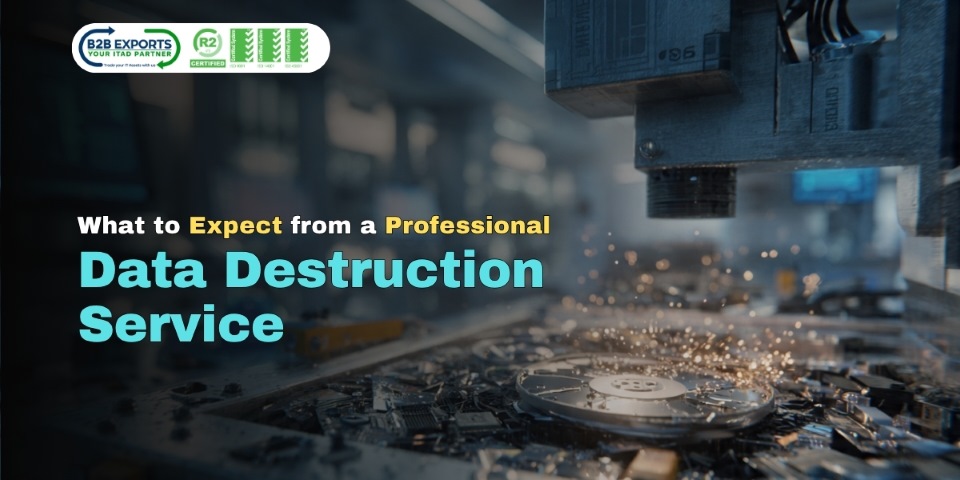
In today’s environment, every organization works with sensitive information, from customer details and financial data to employee records and internal files. When the time comes to retire IT assets, the data stored on them is not automatically removed. Simple actions, like deleting files or reformatting a hard drive, create the illusion of removal, but most of that data can be recovered using readily available recovery tools. Professional data destruction services are not only beneficial, but necessary for this reason.
For CIOs, CISOs, IT managers and compliance officers, the focus is no longer on whether to use such a service, but on selecting the right one and understanding what it should deliver. Organizations that are managing large volumes of IT equipment, cloud providers retiring server infrastructure and data centers decommissioning storage systems all face the same challenge: ensuring that data is completely and verifiably erased before any device leaves their control.
Understanding the Data Destruction Methods Used by Professionals
When your organisation engages with a professional data destruction provider, one of the first steps is evaluating your equipment and recommending the most suitable method for handling it. This decision is not random, as it entirely depends on the kind of storage device involved, the level of data sensitivity as well as the compliance standards your organization is required to meet. Having a clear and thorough knowledge of these methods helps in making better decisions and being thoughtful about the questions raised while reviewing the vendor.
1. Data Wiping for Secure Reuse
Data wiping means overwriting all the information on a device with new information through special software and is not recoverable using any method. This is normally only used when you intend to repurpose or resell the device, because it erases everything but completely leaves hardware intact and ready for reuse. For this purpose, professional-grade tools are useful, following recognized standards, generating reports in detail and confirming that the entire drive has been securely wiped. As a result, this makes data wiping a realistic choice for organizations that are aiming to recover value through IT asset disposition programs. However, its effectiveness depends on proper execution using certified tools and is best suited for devices that are still in good working condition and capable of supporting reliable performance.
2. Degaussing for Magnetic Media
Degaussing works in a completely different way. The data that is stored on traditional hard drives as well as magnetic tapes is disrupted with the help of a powerful magnetic field, thereby making it permanently unreadable. But it’s critical to know this method isn’t applicable to solid-state drives (SSDs) or other flash-based storage because they operate by a different technology. This becomes extremely important for organizations working across a portfolio of storage devices, who need to determine what method to use in each case.
3. Physical Destruction for Maximum Security
Physical destruction, usually done through shredding, is the most final and foolproof method. In this case, the industrial machines break devices into tiny pieces, thereby leaving no chance left for the data to be ever recovered. Because of this, organizations with strict compliance needs, like those seen in healthcare, finance and government sectors, often rely on this approach. A reliable data destruction provider will offer all available networks and help your organization choose the right one based on the type of device and where it sits in your IT asset lifecycle.
End-to-End Data Destruction Process Beyond Basic Data Erasure

A common misunderstanding about data destruction services is that they simply involve erasing data from a device. In reality, a professional service extends far beyond that. It is a structured and fully documented process that actively covers every stage, from the collection of devices to the final reporting provided to the client.
1. Tracking Assets with Precision
The initial step is to log and account for each asset involved. Each device that is marked for hard drive disposal (laptop, server, storage system, desktop), details such as make, model, serial number, asset tag are all meticulously recorded. This helps to create a clear chain of custody, so that organizations will know precisely what assets were dealt with and when. In the absence of a proper inventory tracking system, it becomes difficult to manage assets effectively and devices containing sensitive information may create a compliance risk.
2. Choosing the Right Approach to Data Destruction
Once the inventory is complete, the appropriate data destruction method is selected based on the device type, the confidentiality of data and requirements of the organization. This is where professional data destruction services stand apart from basic disposal because not all devices are handled the same way. Various kinds of devices, from SSDs and traditional hard disks to tapes and mobile devices all require different approaches. A qualified data destruction company has the equipment, expertise and certifications to correctly match the right device, ensuring that data is removed completely, without any possibility of recovery.
3. Documented Proof and Compliance
This stage is of verification and reporting that involves keeping a complete record of every asset that has been through the process and issuing a formal certificate to the organization to confirm the secure removal of data. This certificate acts as an important compliance document that can be presented at the time of audits or regulatory checks. For organizations under frameworks like GDPR or HIPAA, keeping track of details like this is part and parcel of responsible data handling.
Why a Certificate of Destruction Matters for Protecting Sensitive Data
Once the process of data destruction is finished, one of the key things an organization should always get from a trusted service provider is a certificate of destruction. This is not just another document, as it is their proof that everything was handled properly and that the data was destroyed as promised. For businesses that work under strict compliance requirements, having this certificate isn’t a choice because it is something organizations simply can’t do without.
1. Essential Components in a Certificate of Destruction
A certificate of destruction should also be very specific and not simply an affirmation. It usually contains the date and location of the destruction, name of certified company that performed the process and data destruction method. It may also detail names/certification or even references to the standards/regulations adhered to by personnel responsible. Certificates may also include a digital audit trail or even photographic evidence of physical destruction in certain cases, particularly in regulated industries, so that they can be used to provide additional assurance.
2. A Key Document for Compliance Assurance
The certificate of destruction plays several important roles. First, it provides protection at the time of regulatory audits by serving as clear evidence that adequate data handling methods were taken into account. Second, it helps in reducing internal risk by showing that the process was handled by a qualified and authorized party. Finally, it completes the documentation cycle for IT assets. Many organizations track devices from the time they are purchased until they are retired and this certificate becomes the final record confirming that the data lifecycle has been properly closed.
It’s always worth asking how a data destruction provider issues such certificates, what information they include and how quickly they are produced, as this is indicative of their wider approach to being accountable and operating in compliance.
Certifications That Separate Reputable Vendors from the Rest

Certifications are one of the most obvious markers available to you in terms of professionalism and accountability when you’re looking for a data destruction company. They indicate an independently-audited vendor, one who has documented processes and is bound to a recognized standard of practice. For organizations maintaining compliance under regulations such as HIPAA, GDPR, PCI-DSS, engagement with a certified provider is often not optional but necessary.
R2v3 certification, the latest version of the responsible recycling standards, is one of the main credentials to look for when choosing a data destruction or IT asset disposition (ITAD) provider. Created by Sustainable Electronics Recycling International (SERI), it requires vendors to follow strict practices regarding data security, environmental care, worker safety as well as downstream tracking. In simpler words, the responsibility of an R2v3-certified provider is not only about what happens within its own facility, but also for what happens to equipment and materials after they leave it. This matters because, in the past, some lower-quality vendors have passed assets to downstream partners who did not follow proper or legal practices. R2v3 helps in eliminating that risk by enforcing accountability across the entire chain.
In addition to R2v3 certification, consider vendors that also hold ISO certifications with respect to consistent performance standards, eco-conscious operations and a safe working environment. ISO 9001 reflects the company’s attitude towards stable quality systems. ISO 14001 is about the responsible management of a company’s environmental impact and ISO 45001 prioritizes employee safety and healthy working conditions in everyday operations.
How to Evaluate a Data Destruction Company Before You Engage Them
Choosing the right data destruction services provider is not just another vendor decision, it has a direct impact on your organization’s security as well as compliance in the long run. Various vendors may follow different standards and opting for the wrong one can lead to serious risks. Here’s how the evaluation process should be approached in a practical way.
1. Verify Certifications and Facility Standards
As mentioned earlier in the blog, R2v3 and relevant ISO certifications should be your starting point. It is not advisable to rely on verbal claims, thus always ask for valid certificates and cross-check them with issuing bodies. If your organization’s scale or risk level is on the higher side, consider visiting the facility in person. A credible provider will usually be open to walkthroughs. While you’re there, observe how secure the premises are, how assets are tracked and how equipment is actually handled on ground.
2. Assess their Data Security Protocols
Essentially, go beyond general questions and ask how devices are transported, where they are stored before processing, who can access them and how employees are screened. A professional provider should have this all documented, in writing. It is also important to know how they treat various media formats such as SSDs, HDDs, mobile devices and tapes since each requires its own destruction or sanitization method.
3. Understand their Downstream Accountability
One of the important factors is what happens after the initial processing. Some vendors pass materials to third parties that may not follow the same standards. Certified providers, especially those with R2v3, are expected to maintain accountability throughout the downstream chain, but it is still important to ask. Request details about their downstream partners, how they are evaluated and what documentation is maintained once materials leave the facility.
4. Request References and Review Reporting Capabilities
Ask for references from organizations similar to yours or within your industry. A reliable provider should be comfortable sharing them. Also, it is advised to review the quality of their reporting, including audit trails, detailed service reports and certificates of destruction. Clear and well-structured documentation is often a good indicator of how strong and consistent their overall processes are.
Conclusion: Secure Data Destruction Is a Strategic Decision
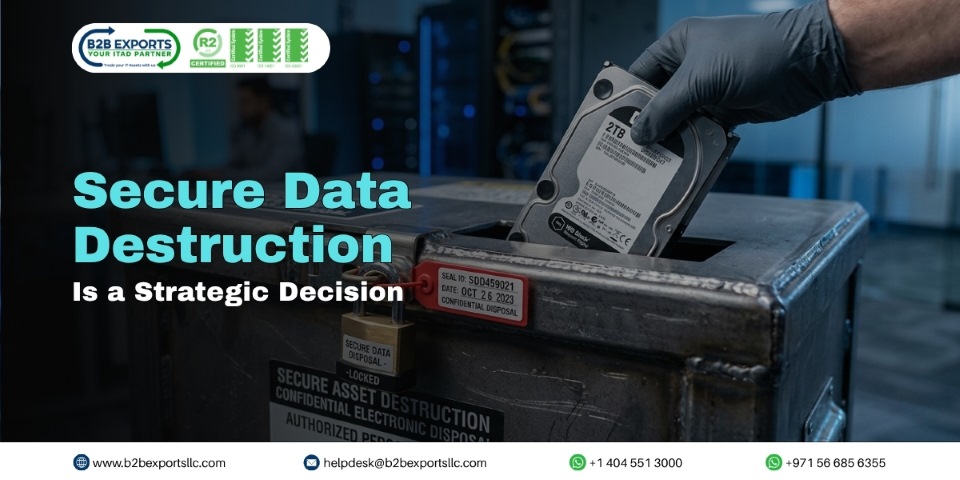
Retiring IT equipment is a normal part of running any modern organization. However, how that process is handled, especially when it comes to the data stored on those devices, is a strategic decision that directly affects security compliance as well as the overall reputation.
Professional data destruction services offer far more than simple disposal. They provided a structured, well-documented process that ensures the data lifecycle is properly closed. With certified expertise and appropriately defined standards, these services help organizations in avoiding the risks of data breaches and regulatory issues. When combined with an efficient IT asset disposition strategy, they can also support value recovery from retired assets instead of treating them as a complete loss.
For teams overseeing technology, security and regulatory requirements, the main takeaway is that data destruction should not be treated as a routine back-end task. Like any other critical vendor decision, it needs to be thoroughly assessed. A trusted, certified and accountable provider can be an important partner in keeping sensitive information safe and retaining credibility.
As organizations review their current processes and plan upcoming equipment retirements, it is important to take a structured approach. Looking for certifications such as R2v3 certification, helps in ensuring that detailed certificates of destruction are provided, understanding the methods used for different types of media and asking clear questions about downstream handling. Most importantly, it is essential to make sure every device is fully traceable, from the moment it leaves your control to the point where its data lifecycle is officially and securely closed.