 Auction
 Importance of Data Center Decommissioning Security and Compliance
Businesses invest time and money in planning before developing an IT infrastructure. From new offices and systems to new ways of working, everything is well planned with the intention of growth and innovation. However, they often don’t give the same level of priority to how things should end. This lack of planning towards the end can cause serious trouble for the organizations.
A digital center can be a physical facility that keeps IT Assets and provides access to technology. The facility contains IT assets, including servers, laptops, desktops, RAMs, printers, storage and networking devices. Today, more organisations are relying on them to run smooth operations. It includes every digital aspect from cloud platforms and real-time transactions to government infrastructure and healthcare records. Businesses need to retire data centers for reasons such as migration to cloud services or if technology becomes outdated. Thus, a systematic process of Data Center Decommissioning shall be used to shut them down.
The Data Center Decommissioning process is more than just switching off the equipment and removing it from the facility. This phase of the infrastructure lifecycle has several risks and requires responsible expertise. These IT assets in a data center contain a variety of information that does not get erased just by shutting them off, as years of sensitive data are stored in the storage devices. Any piece of information, new or old, can cause serious threats due to leakages or misuse. Important records at the workplace, including payments, internal conversations and employee details, can be compromised if they are not erased securely.
Data Center Decommissioning ensures that the infrastructure is retired responsibly at the end of its lifecycle. Thus, taking the decommissioning process lightly can be dangerous for the organizations. Poor handling can also result in data center security and compliance failures. Lack of client privacy can lose customer trust, which can result in companies facing many legal problems and regulatory investigations. In the long term, such consequences can harm their goodwill after the improper shutdown of a data center. The way a data center is decommissioned reflects the sincerity and responsibility of a business. Thus, safety must be ensured at every stage, not just at the beginning.
Role of IT Assets in Data Center Decommissioning
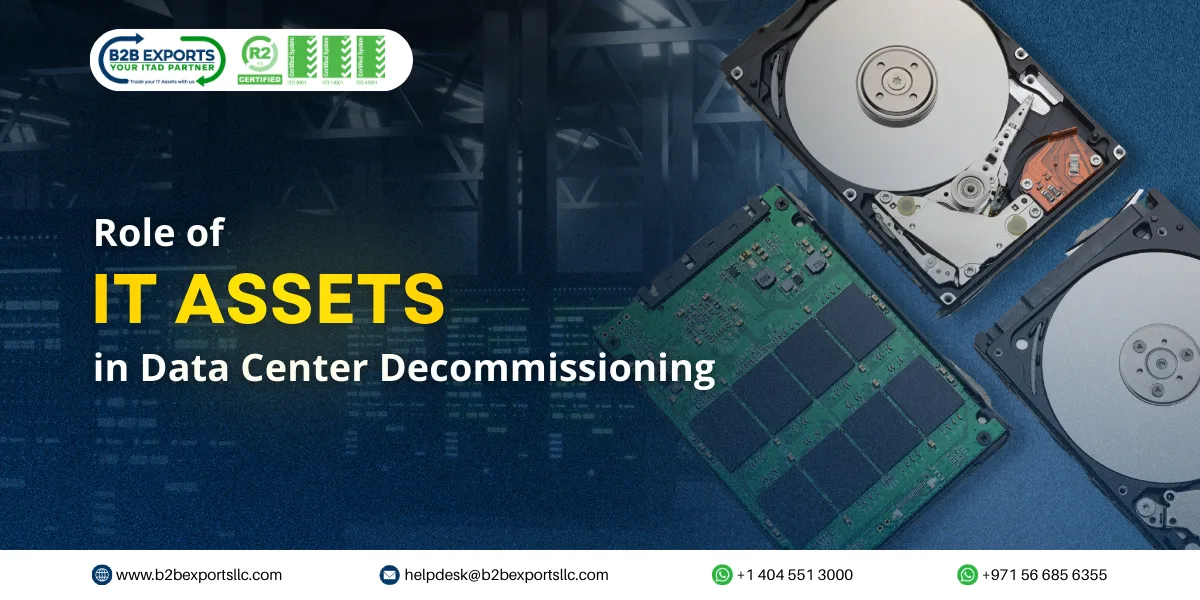
Primarily, the data is carried out by the IT assets in a data center. All important information is stored in them through servers, networking devices, backup media, etc. Data can be recovered even from obsolete or inactive assets if there is no data sanitization or physical destruction. A well-structured decommissioning process must focus on visibility. For this, it needs to maintain an accurate inventory of assets and information stored on them. Data centers are constantly upgraded, scaled and replaced throughout their lifecycle. An organization may source assets from several vendors and adjust these assets for different projects. Every detail should be properly documented and reported.
Risks arise when the IT assets lack visibility or are missed during data sanitization. Sometimes, equipment is removed from the facility without being authorized or documented. Regulations are violated when assets are disposed of without meeting environmental standards. Carelessness towards any asset can lead to increasing investigations and penalties in regulated industries. Such risks indicate that IT asset disposition must be performed as a controlled and auditable activity.
The way IT assets are discarded also has financial and environmental implications. Sometimes, equipment can be reused or remarketed after its retirement. This helps organizations to recover the maximum value from them. Inappropriate disposal of these IT assets can generate harmful environmental violations through e-waste and thus reduce the level of sustainability. This recognition indicates that IT assets can not only build value, but they can also create risks.
IT Asset Management is necessary for a safe data center decommissioning process. IT asset management maintains a track record of the asset inventory from acquisition to disposition. It provides the complete picture of asset ownership, stage in the lifecycle and compliance.
How Data Center Decommissioning Works
A data center decommissioning process does not wait for all the systems to shut down. It begins even before the lifecycle of a data center actually ends. The process is considered complete only after auditing and complying with industry standards. A secure and compliant decommissioning protects data and avoids risk through the following steps:
1. Early Planning Phase
There must be clarity regarding why a data center is being decommissioned. Knowing when and how execution will take place helps in gaining control. This involves identifying the scope of the data center and setting the timelines. The teams must clearly understand their roles and responsibilities and they need to agree on end goals and risks involved. Every team, including IT, security, compliance, financial and legal, shall coordinate with each other to achieve those goals. Approvals and reporting structure for risk mitigation, regulations and operations lead to structured decommissioning.
2. Discovering Assets and Understanding Dependencies
It involves identifying every asset of the data center and the information stored within each device. This is followed by finding any possible connection between them. Sometimes, hidden systems or unrecognized connections can lead to failures in a data center. If done properly, it can help avoid data loss and unexpected disruptions.
3. Sanitization of Data
Data can be recovered even after file deletion and drive formatting. Sanitization is performed to reduce the risk of data leakage. Approved methods must be used for erasing or physically destroying all data-bearing assets. This is done based on both the sensitivity of the data and the device itself. The sanitization process must be documented as evidence that shows that the data is permanently removed from the devices. The proof helps meet regulatory expectations and standards.
4. Physical Removal and Handling Asset Disposition
The next step involves transporting and removing the equipment from the data center. The focus is to ensure accountability at each step by tracking the transport of assets. The company policies and legal formalities decide whether the hardware is recycled, resold, or destroyed.
5. Reporting and Closing the Process
Finally, the documentation ensures the collection and review of asset reports, data destruction certificates and compliance records. Maintaining these records is helpful for future auditing and risk reviews. Thus, reporting plays an important role after shutting down a data center.
Key Security Risks During Decommissioning
The risks involved in data center decommissioning differ from those that exist during day-to-day operations. One of them arises when the residue data gets exposed or leaked. Unless the storage devices are properly cleaned, they continue to retain an organization’s sensitive information. Therefore, it is important to take steps beyond just shutting down the system.
During this process, many people acquire increased access to the systems and facilities. This can lead to insider threats by temporary staff, contractors and third-party vendors. As a result, data can be misused without supervision or consistent monitoring. Another risk can be failure in the chain of custody. During decommissioning, assets are moved through various locations and pass by different handlers. There can be loss or theft of assets in the absence of real-time tracking. Losing custody of assets means organizations no longer have control over their own data. This impacts data center security and compliance, leading to data breaches and penalties.
Physical security is also an equally important aspect during the decommissioning process. Sometimes, situations can become risky due to the absence of adequate staff members, flexible access controls and inactive monitoring systems. Sensitive information and assets can be harmed without taking the necessary measures. A mature data center decommissioning process mitigates possible risks and securely disposes of the assets.
Regulatory Expectations for Data Center Security and Compliance
Over the years, regulatory requirements for data protection have expanded drastically. As a result, data center decommissioning is now considered one of the riskiest stages in the data lifecycle. The reason behind it is that highly unsafe activities are performed simultaneously. This includes everything from data handling and movement of IT assets to external involvement and reduced operational oversight. During decommissioning, data center security and compliance requirements are stricter than for the normal course of action.
Data center decommissioning is closely examined during the audits for governance and control. The auditors rely on detailed evidence and not just on the policies they follow. This proves that IT assets are identified and data is sanitized properly. Auditors look for controlled logistics and documentation procedures. Regulatory inspections may increase audit findings, including missing inventories, incomplete records of destruction or vague details.
External providers can help organizations to improve their operational efficiency. This may include transportation, data destruction, recycling or reselling of retired assets. It does not mean accountability can be completely transferred to them. Organizations are still responsible for data center security and compliance regulations. Along with ongoing oversight, a compliant decommissioning strategy must ensure due diligence and contractual controls.
In today’s time, environmental and ESG concerns are increasing fast. Therefore, another regulatory expectation is to meet environmental compliance. Organizations must carefully handle electronic waste to comply with strict regulations. Otherwise, they will be charged heavy fines and penalties for improper disposal. Regulatory requirements include responsible recycling, disposition of hazardous material and transparent reporting. In addition to regulators, other stakeholders, such as investors, customers and the public, also evaluate the data center decommissioning.
Multinational organizations face even complex regulatory compliances. They may have to comply with different requirements based on various jurisdictions. These expectations relate to data destruction standards, documentation and cross-border transportation of IT assets. It is important to ensure consistent execution through standardised control and centralized oversight. MNCs must comply with global regulatory standards and regional variations. Meeting these requirements leads to data center security and compliance.
Strategic Benefits of Data Center Decommissioning
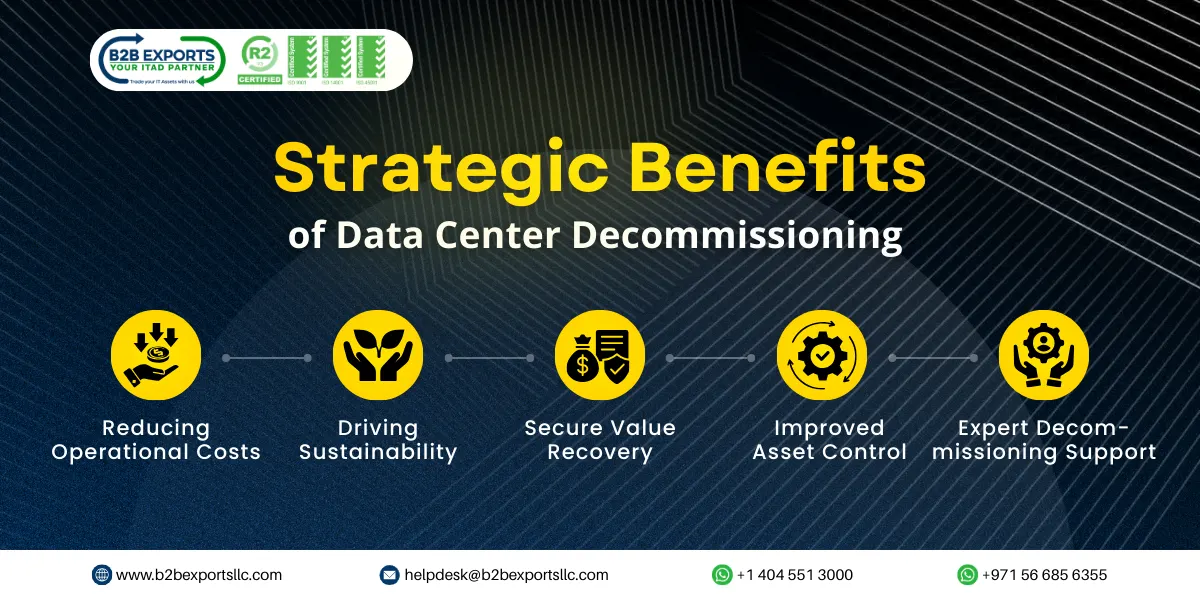
Apart from the security and compliance requirements, data center decommissioning also provides value to businesses. One of the main benefits for the organizations is the reduction in entry points for cyberattacks. An organization can retire its obsolete infrastructure through a structured process. It helps to detect any hidden vulnerabilities in unmonitored systems. A higher cybersecurity position is achieved through compliant procedures.
1. Reducing Operational Costs
Even if old data centers continue to operate, they consume resources. This can include the use of the organization’s power, cooling and support staff. If the approach is disciplined, it can help avoid such costs. Organizations will be able to identify less-used infrastructure and retire unnecessary IT assets. Thus, the budget can be directed towards useful purposes such as digital transformation.
2. Driving Sustainability
Decommissioning helps organizations to meet the goals of sustainability and corporate responsibility. Recycling, reusing and reducing the use of e-waste are responsible IT practices. This makes businesses accountable to customers, investors, partners, and regulators.
3. Secure Value Recovery
Recovering value while maintaining data protection is possible through IT Asset disposition. Decommissioning can help organizations generate value and reduce costs by reselling or refurbishing the IT assets. Verified destruction of data, maintaining asset custody and meeting compliance requirements are necessary.
4. Improved Asset Control
Throughout the decommissioning lifecycle, IT asset management provides better visibility and control. Organizations will be better prepared for audits when every asset is linked to their compliance, secured data destruction and transportation records. Businesses can make better decisions for asset utilisation and retirement in a data center decommissioning process.
5. Expert Decommissioning Support
Specialised data center decommissioning services can also be used to balance the scale and complexity. Organizations gain access to trained staff, secured facilities and necessary certifications. Such services reduce risk and allow internal teams to work on more strategic decisions.
The Future of Data Center Decommissioning
In the near future, data center decommissioning is expected to become more common and valuable for organizations. There shall be faster innovations, increased cloud adoption and changing regulations. This means the need to replace infrastructure will grow compared to the past. Managing IT environments will become more frequent. This reflects that there will be a transition from being a one-time activity to a routine process. Decommissioning must be planned for the long term as it cannot be an afterthought.
The need for visibility and control will continue to increase throughout the asset lifecycle. A smooth and responsible decommissioning will require closer team participation across security, compliance and sustainability. Stakeholders will expect the organizations to be more transparent about retiring and disposing of the technology.
Better planning and building mature decommissioning practices will help organizations to adapt smoothly. Decommissioning should be treated as a long-term IT strategy. This will ensure reduced disruptions, responsible operations and flexibility when digital infrastructure evolves. Decommissioning shall be supported with smart tools and applications in the coming time. Asset tracking and reporting can be improved using automation. As a result, organizations can make better decisions for infrastructure retirement. If decommissioning and modernisation initiatives go together, then it would be easier to scale and respond to change.