 Auction
 The Importance of ISO Standards in IT Asset Disposition Services
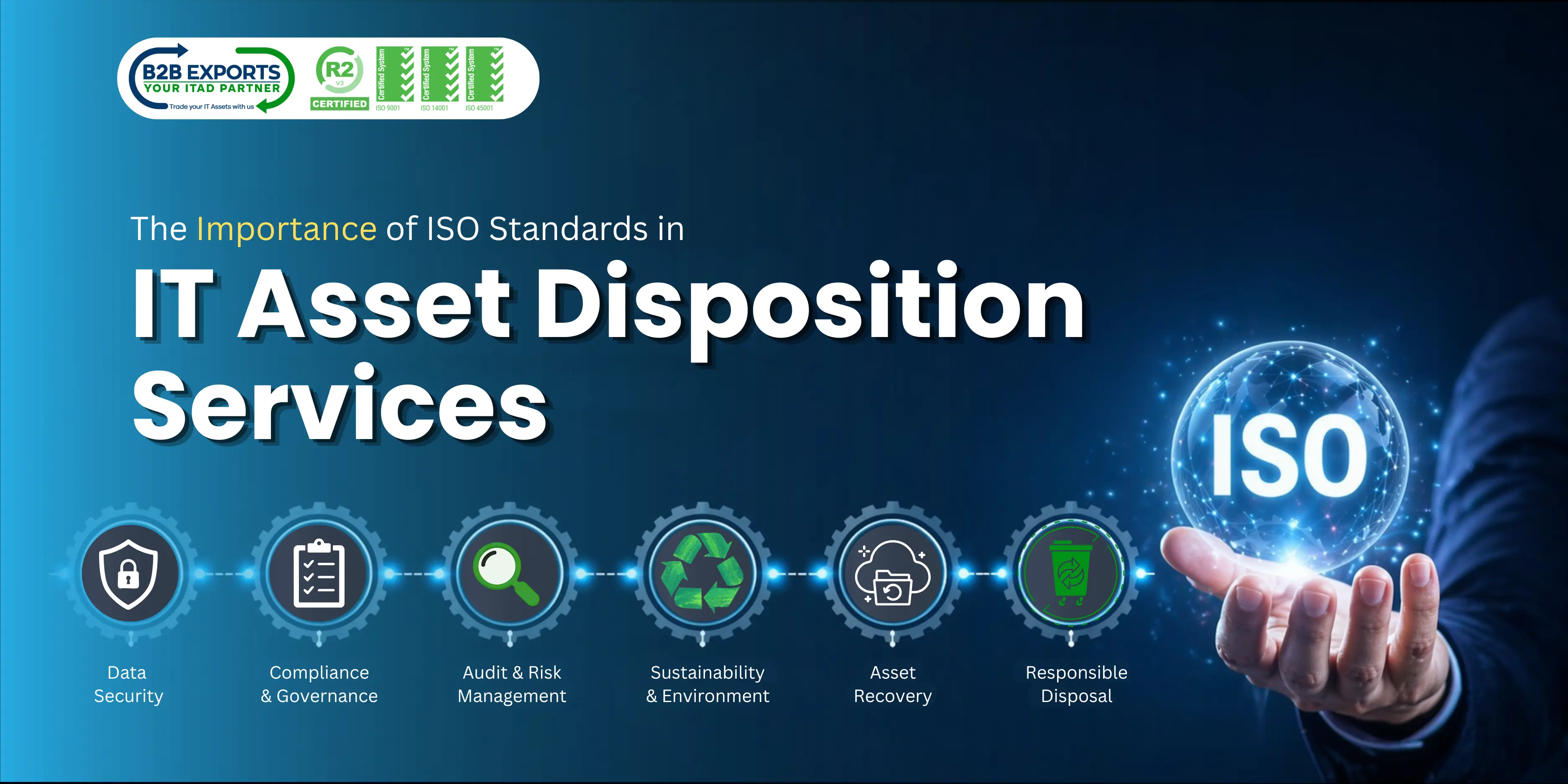
Every organization eventually faces the task of retiring aging IT equipment. Servers are replaced, laptops fall behind current requirements and storage devices reach the end of their functionable life. What follows is not just about moving equipment out of the office, as it influences how safely data is managed, how well compliance obligations are fulfilled and how responsibly retired devices are handled.
IT asset disposition (ITAD) is significantly essential in this situation. ITAD refers to the organized approach organizations use when taking IT equipment out of service. Instead of letting old devices pile up or disposing of them without adequate planning, the process puts emphasis on retiring them in a way that is controlled and responsible. If the process is taken forward rightly, it prevents the misuse of sensitive information, lets businesses restore some value and ensures the equipment is handled properly. Poor approaches cause unnecessary risks, from confidential data falling into the wrong hands to running into compliance issues later on.
The challenge for many organizations is determining whether an ITAD provider is actually following best practices. This is where ISO certifications become important. ISO standards give organizations clear, globally accepted benchmarks for maintaining quality, ensuring the data remains safe and handling processes in a responsible and consistent way. They provide verified assurance that processes are being followed consistently, not just claimed. For CIOs, CISOs, compliance officers and IT managers evaluating ITAD partners, understanding the relevance of ISO standards is now a key part of making responsible decisions.
Why ISO Certification Is a Non-Negotiable Requirement in ITAD
The ITAD industry has developed and expanded rapidly over the past number of years. As organizations scale their technology infrastructure, from traditional on-premise environments to hybrid as well as cloud-based systems, the quantity of retired IT assets has increased at the same pace. With this growth, the ITAD marketplace has also become more scattered, including both highly certified providers and informal recyclers operating without proper monitoring or responsibility.
Certification as a Mark of Credibility
ISO certification is one of the most reliable ways by which credible ITAD providers can be distinguished from those lacking structured processes. When an ITAD company holds recognized ISO certifications, it indicates that an independent, internationally respected body has audited its operations, validated its procedures and confirmed that its practices definitely meets defined standards. This is not a self declared claim. Certification is earned through detailed assessments and must be maintained through regular audits and ongoing compliance reviews.
Risks of Non-Certified Providers
For enterprises, cloud providers as well as regulated industries such as healthcare and banking, working with a non-certified ITAD vendor introduces significant risks which could have been avoided with proactive measures. Data protection requirements, including HIPAA and similar regulations, extend to the disposal phase of IT assets. If a vendor fails to handle retired equipment securely and due to that sensitive data gets exposed, responsibility can still sit with the original organization. Providers that are ISO-certified help in mitigating this risk by following structured, auditable processes that showcase due diligence at the time of disposition.
Structured Processes Through Certification
ISO certification not only provides surety that compliance obligations are met by the organization, but also reflects process maturity. Certified ITAD providers allow maintaining documented workflows, trained personnel and defined quality controls across collection, secure data destruction, refurbishment and disposal stages. This consistency reduces operational uncertainty and ensures that assets are handled in a predictable, accountable manner. For organizations managing large amounts of retired equipment, this kind of discipline helps in providing the desired confidence that the ITAD process will remain secure, compliant and professionally managed from the beginning and till the very end.
The Three Core ISO Standards That Define Quality ITAD
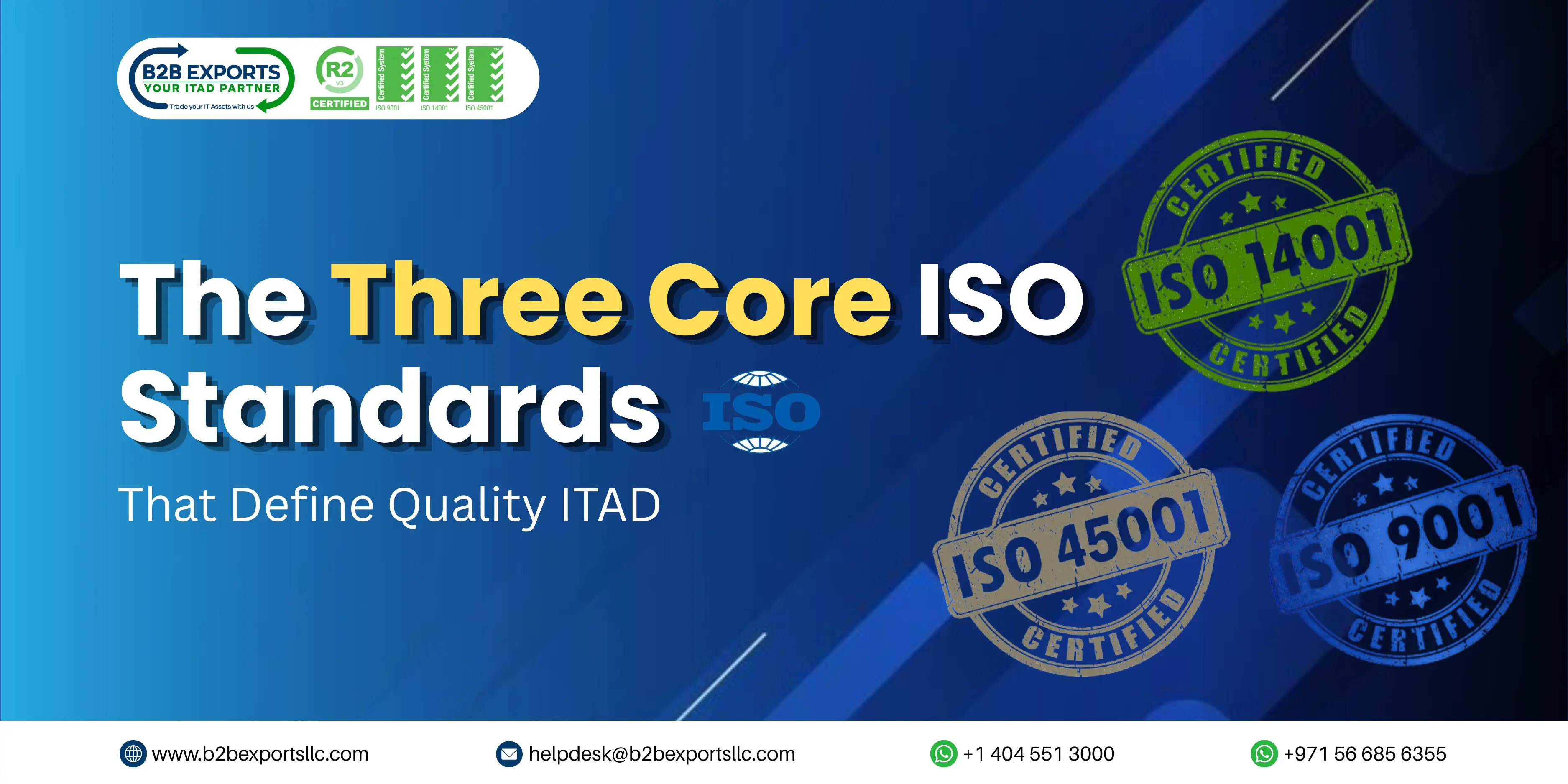
In the ITAD industry, three standards especially stand out because they clearly address the areas that matter the most: consistency in services, responsibility towards the sustainability agenda and safety at the workplace. Altogether, these very certifications help show how professionally and responsibly an ITAD provider works.
-
Consistency in ITAD Processes
ISO 9001 is all about consistency. For an ITAD provider, it means there are clear steps for how assets are collected, processed and documented. Instead of relying on informal handling, everything follows a defined process. This helps in reducing mistakes and ensures that data destruction, logistics and reporting are handled in a structured way. For organizations handling retired equipment, this brings predictability and confidence in how assets will be managed.
-
Sustainable Disposal of IT Assets
ISO 14001 focuses on responsible practices without causing any risks to the environment. In the ITAD space, this means making sure retired IT equipment is handled with a great deal of thought, reused wherever it is possible, refurbished when viable and recycled correctly when it reaches end of life. It also requires companies to follow environmental regulations and monitor their impact. For businesses, this provides reassurance that their retired devices are not contributing to unnecessary e-waste.
-
Work Place Safety in ITAD
ISO 45001 relates to workplace safety. ITAD work often involves moving, dismantling and processing hardware, which can carry a lot of physical risks. This standard is known for ensuring that providers have safety procedures, proper training and controlled handling practices in place. When operations are run safely and carefully, assets are also handled with more responsibility, which benefits both the provider and the organizations trusting them with retired equipment.
How ISO Standards Protect Sensitive Data During the Disposition Process
Data security is often the biggest concern when organizations retire IT equipment. Every device, whether it is a server, storage unit, desktop, mobile device or laptop, may continue possessing confidential information. Records related to the company's finances, its staff information and internal files, often tend to be stored even after the equipment is taken out of use. Therefore, simply powering off a device does not remove this data. It stays on the drive until it is properly erased or destroyed.
ISO standards help make sure this process is handled carefully and consistently. An ISO-certified ITAD provider follows clear, documented steps for managing each device. Equipment is logged when picked-up, tracked through every passing stage and processed using defined data destruction methods. Chain-of-custody records are maintained and certificates are issued once the data has been securely removed. Because everything is documented, organizations have proof that their devices were handled responsibly.
It is important because big problems can occur in case small mistakes are neglected. A data breach caused by retired hardware can lead to fines, legal complications, loss of trust in customers and disruption to operations. The consequences turn out to be more significant for regulated industries. ISO certification does not provide a sure shot guarantee that issues will never take place, but at the same time it shows that the provider is using proper controls for reducing risk and handling the process in the right manner. For organizations dealing with confidential and sensitive information, that added confidence is essential.
ISO Standards and their Role in Supporting IT Asset Management Programs
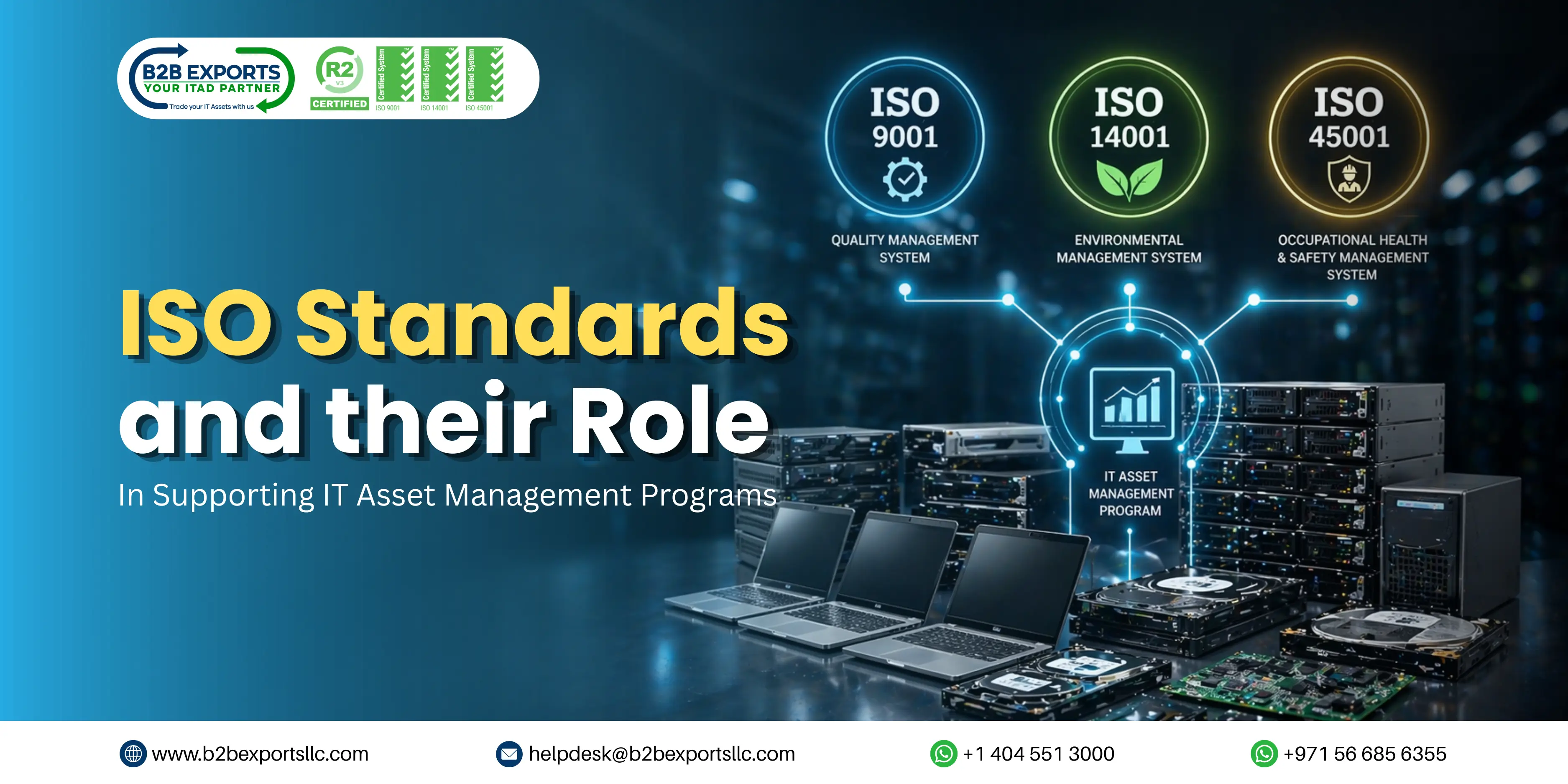
The prevailing relationship between IT asset disposition and IT asset management is many times underestimated. IT asset management focuses on keeping track of IT assets throughout its journey, from when it is obtained to the point where it is retired. In simpler words, a strong ITAM program is the one on which organizations can rely for maintaining visibility into their hardware and knowing where it is being used, since when it has been providing service, when it shall be replaced. The final stage of this lifecycle is where ISO-certified ITAD processes become especially valuable.
When the end time of an IT asset comes, a certified ITAD provider follows well-built procedures for handling and documenting each asset and keeps full fledged records. Devices are logged, processed and assigned final outcomes such as refurbishment, recycling or destruction. The documentation generated during this stage, including disposal details and data destruction confirmation, can be added back into asset records. This helps in closing the lifecycle loop and also ensures nothing is left undocumented.
For enterprises managing large device fleets, this level of structure makes a practical difference. Without a properly defined ITAD process, retired equipment may be removed from use without proper updates to records. Over time, this leads to incomplete tracking and uncertainty around how assets were handled. ITAD practices that are created in accordance with standards set by ISO helps in maintaining clarity by ensuring that retirement activities are recorded consistently and supported by documentation that aids verification.
Key Benefits of Choosing an ISO-Certified ITAD Provider
Selecting an ISO-certified ITAD partner helps in delivering practical, measurable advantages across IT operations and organizational risk management. These benefits are not just restricted to basic asset disposal but also help organizations in maintaining control, visibility and consistency throughout the process of retirement. The following points highlight the most important results:
-
Lower Legal and Compliance Risk
Certified ITAD providers generate the documentation that compliance teams, legal departments and auditors rely on. Evidence of due diligence includes verified data sanitization paperwork, tracking documentation for assets, and sustainability compliance reports. This documentation becomes especially important under various regulations such as GDPR, HIPAA, where organizations must showcase control over data for the entire lifecycle, including during disposal.
-
Stronger Visibility and Accountability
A certified provider is subject to routine external review. An independent certification body evaluates its processes, producing a level of supervision that self-declared compliance cannot offer. Transparency is beneficial to the organization since they can ask for certification details, audit confirmations and process documentation themselves as a checkpoint of due diligence and governance.
-
Predictable Service Across All Requirements
ISO 9001 certification emphasizes structured and repeatable service delivery. This means the same level of process control is applied regardless of the volume of assets or complexity in operations. For organizations managing multiple offices, data centers or distributed environments, consistent quality in terms of services help in reducing variability and helps prevent gaps in handling retired equipment.
-
Sync with Environmental and ESG Goals
Some organizations take their commitments to the formal Environmental, Social and Governance alignment beyond just words. An ISO 14001 level partner helps drive these initiatives by ensuring old IT equipment is disposed of in an environmentally respectful manner through reuse, refurbishing or compliant recycling. This is especially applicable to those organizations that are monitoring sustainability metrics and/or reporting environmental, social and governance (ESG) performance to management, investors or regulators.
-
Long-Term Partnership Confidence
ISO certification is not something a company receives once and erases all memory of. As with all standards, it needs re-assessment checks and further improvements to maintain the standards. Choosing a certified ITAD provider means you are selecting a partner that can offer structured practices every time, so with their assistance you receive consistent service and reliable quality for years to come.
Making the Right Choice: What to Look for in a Certified ITAD partner
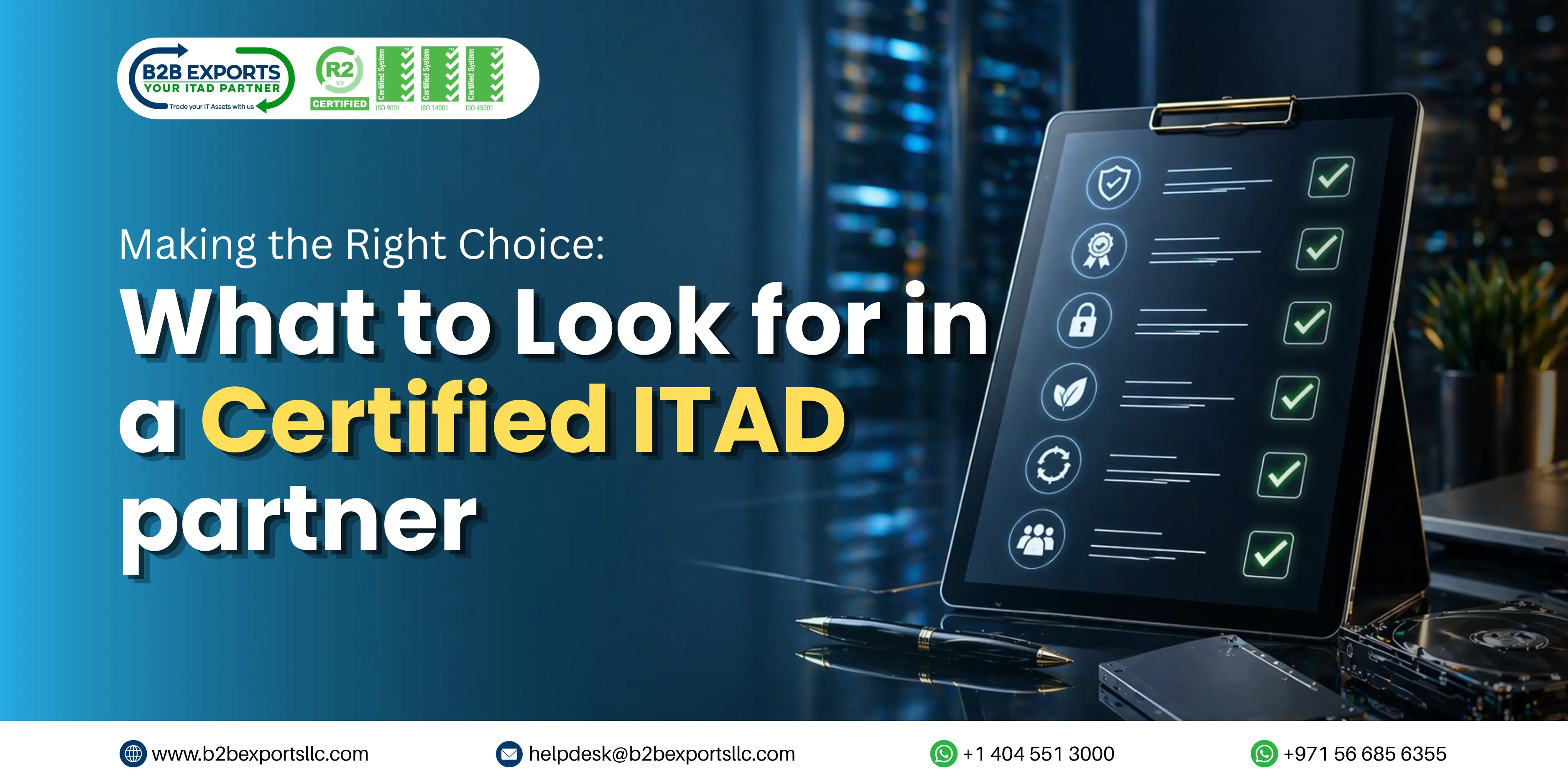
Understanding the importance of ISO certification is one act. Choosing the right ITAD partner based on that knowledge requires a very practical evaluation. When reviewing providers, organizations should look beyond certification badges and focus on how those standards are actually applied. Check which ISO certifications the provider holds and ensure they are valid first. ISO certifications need to be renewed after certain intervals of time and an expired certification is not as credible on your brand as a valid one. An existing provider who has had ISO 9001 in the past but now does not have it, may be operating without many of the same structured processes that a currently certified organization is.
Second, ask how these standards are reflected in everyday operations. A reliable ITAD provider should be able to explain how ISO requirements influence asset collection, destruction of data, transportation and environmental handling. Clear explanations show that certification is embedded in workflows. Vague responses may indicate that certification exists formally but is not fully documented.
Third, it is important to ask for example records, including official proof that data has been securely erased, along with comprehensive logs tracking the transfer process. These documents are something that compliance teams, auditors as well as legal departments depend on. Reviewing them in advance helps ensure that reporting is structured, detailed and suitable for audit requirements. If documentation is unclear or inconsistent, it raises concerns regardless of certification claims.
Consider whether the provider’s certifications align with your regulatory environment. Different industries operate under several obligations. Healthcare organizations are supposed to manage patient data safely, government contractors often follow additional controls. The most suitable ITAD partners understand these requirements and can explain how their certified processes support compliance expectations as required by specific industries.
Conclusion
Retiring IT equipment is not a routine based administrative task anymore. It directly affects the safety of data, compliances, acknowledgement towards environmental impact and organizational reputation. As businesses update systems more frequently and shift workloads to the cloud, the number of retired devices continues to grow. A structured approach is necessary to manage this change securely.
ISO standards help in bringing the desired structure and accountability in IT asset disposition. They are able to clearly state the expectations and ensure assets are handled in a consistent way and that proper records are maintained. This makes audits easier and gives organizations confidence that confidential data has been safely eliminated and outdated devices are handled properly.