 Auction
 Why is ITAD a Key Part of Your IT Lifecycle Management?
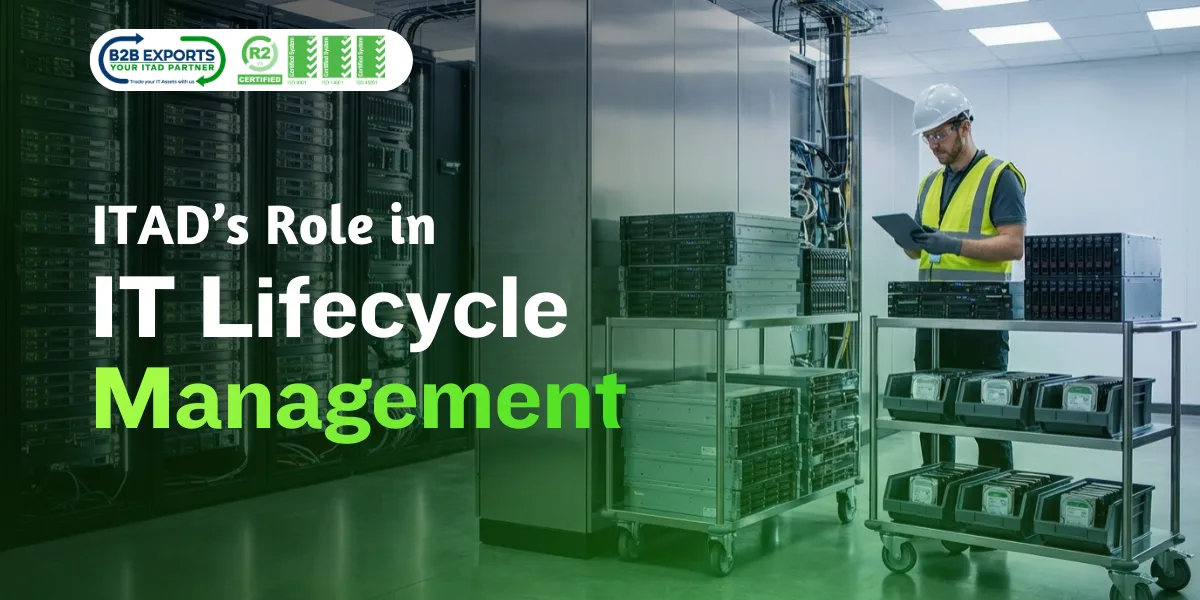
IT infrastructure represents more than just a set of operational tools, especially in today’s world, which is highly dependent on technology. It holds intellectual property and adds value by giving a significant competitive advantage, making it extremely essential to protect sensitive data at every stage. However, many organisations still pay the majority of their attention only on purchasing and deploying new IT assets, giving low priority to the final stage of the equipment lifecycle. The gap thus formed creates serious risks in the areas of security, compliance and finance. As a result, IT asset disposition (ITAD) is no longer a basic act of disposal and has turned into a valuable function. It directly affects an organisation’s risk management capability, financial performance and helps in achieving sustainability targets.
The ITAD market is growing worldwide due to factors such as organisations facing more complex regulations, strict laws for data privacy and increasing pressure to reduce their environmental impact. Many enterprises now understand that IT asset lifecycle management is not complete without an effective disposition strategy. This is because it helps them in balancing data security and compliance while enabling value recovery and responsible recycling.
The real question is no longer whether ITAD matters, but how to include it properly in managing the asset lifecycle. This aspect is especially significant for organisations managing large IT environments that comprise servers, storage devices and networking infrastructure. The answer requires treating ITAD not as a final step, but as a continuous process with detailed planning from the moment an asset is acquired.
The Role of ITAD in Modern IT Asset Management
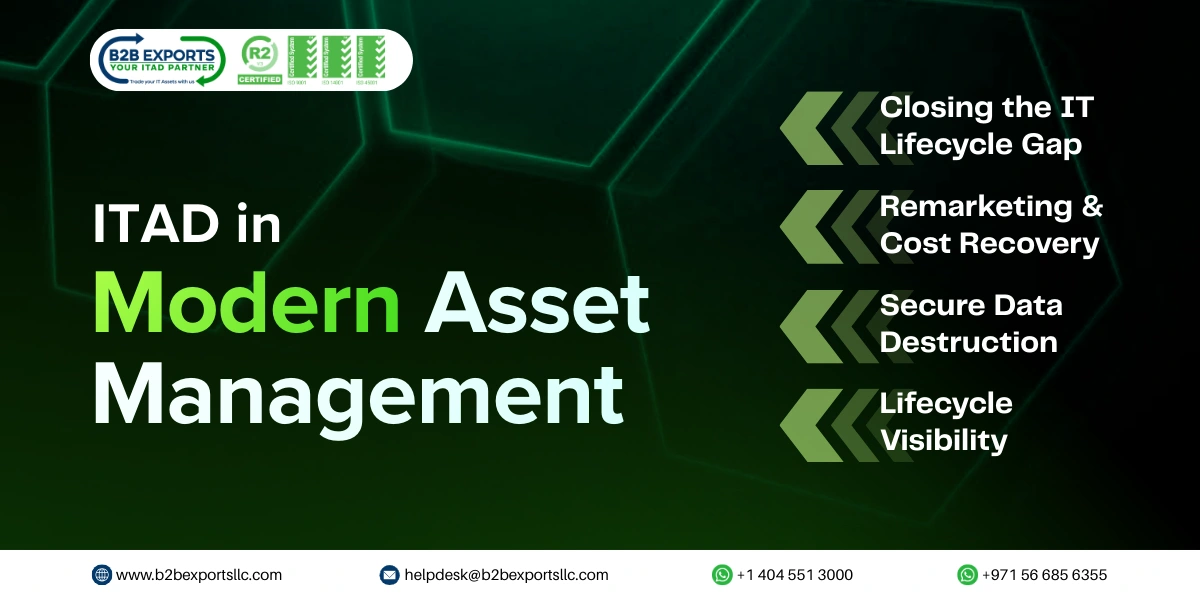
1. Closing the IT Asset Lifecycle Gap
IT asset management traditionally used to cover processes from procurement and deployment to maintenance and refresh cycles. However, this approach can create a major gap at the end of the usable life of an asset if no attention is given to its disposal. ITAD acts as the final step that helps in turning basic asset tracking into a comprehensive approach, covering the entire lifecycle of equipment. Without proper disposition processes, organisations often end up with retired equipment that not only consumes valuable space in data centers but also continues to hold sensitive information and leads to missed financial opportunities.
2. Remarketing and Cost Recovery
The financial impact is not just restricted to the storage concerns. As retired hardware mostly still has a strong resale value, especially in those environments where the equipment is replaced even before it stops functioning. Therefore, organisations can obtain a significant part of the original investment that they initially made in servers, storage systems and other networking equipment through IT asset remarketing. Hence, this recovered value is beneficial for the IT environment by reducing the cost of upgrading to newer devices and lowering the total cost of ownership.
3. Data Security and Secure Destruction Controls
It is important to acknowledge that ITAD is the stage where data security is either ensured properly or seriously compromised. Sometimes, storage devices can lead to hidden security risks as they can still hold data even after standard deletion procedures are performed. The use of secure data destruction methods, such as software-based erasure, physical shredding or magnetic destruction, must be carried out with proper documentation and verification. Without adopting strict ITAD controls, risks including data breaches, theft of intellectual property and compliance failures can increase rapidly.
4. Improved Lifecycle Visibility
Involving IT asset disposition in IT asset lifecycle management provides greater visibility into refresh cycles, which helps in forecasting volumes for disposal and supporting better planning for both logistics and vendor coordination. Organisations that consider this process as an ongoing program rather than a last-minute activity are able to achieve stronger results in audits and financial recovery.
Compliance and Data Security Requirements
Over the recent years, it has been observed that the regulatory environment controlling data protection and electronic waste has become more demanding. Industrial regulations such as GDPR and HIPAA continue to set strict rules for managing data at every stage of its lifecycle, including the end phase of the equipment when it is retired. Along with heavy fines, organisations that do not comply with these regulations face reputational damage, legal action and restrictions on operating business.
Organisations must use certified methods and prove that all the personal data has been completely destroyed or is entirely unrecoverable. Beyond basic deletion, this requires accurate device tracking, secure destruction procedures which are documented at each step and complete audit records that can support regulatory reviews. These requirements apply under GDPR and CCPA, while healthcare organisations must ensure protected health information can’t be accessed, read or recovered in accordance with HIPAA.
Financial services organisations often face even stricter expectations under regulations that define specific retention timelines and disposal standards regarding electronic records. The overlap between guidelines for record retention and secure disposal creates a complex compliance challenge where both timing and method matter. ITAD programs that include automated compliance tracking help in ensuring the correct handling of assets based on various factors, from data classification and retention schedules to suitable regulatory requirements.
In addition to laws meant for data protection, electronic waste regulations are another important aspect of compliance. Many regions have introduced strict recycling requirements and disposal restrictions for dealing with electronic equipment. Organisations that operate in different locations are required to manage various legal rules in accordance with local regulations, many of which also ban sending electronics to landfills and require certified methods to be used for recycling. If these regulations are not complied with, then they may face penalties, license revocation and even import or export restrictions.
Due to regulatory expectations with regard to data security and environmental obligations, IT asset disposition can no longer be treated as a basic disposal activity that can be handled by general waste vendors or internal teams. Certified ITAD providers follow documented processes which are based on recognised standards, giving organisations reliable proof that assets were dealt in a secure and responsible manner. This certified approach helps in improving compliance and lowering risk by ensuring assets are managed by trusted and responsible service providers.
Security Risks of Inadequate Asset Disposition
1. Data Exposure from Retired Devices
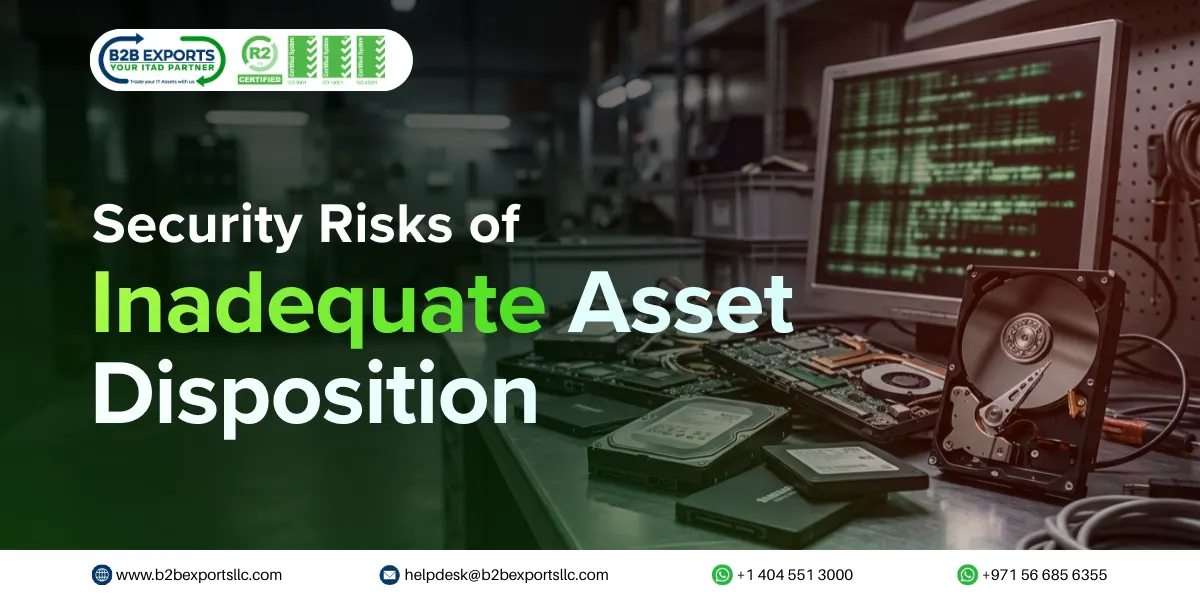
Data breaches caused by improperly disposed hardware are among the most avoidable security failures that still occur frequently in IT infrastructure. Studies have repeatedly shown that many used storage devices that are sold in secondary markets continue to hold recoverable data, from passwords and intellectual property to customer records and financial information. This represents a major gap between what organisations assume has been erased and what is actually still present on their device.
2. Limitation of Standard Data Deletion
The main issue lies in how data remains stored in the devices even after deletion. This is because standard deletion and basic formatting can only remove file references, while the actual data stays on the drive and can be recovered using tools that are easily available. Secure data destruction means fully wiping the drive by overwriting all data which is stored on traditional hard drives or using specialised commands for erasing that are designed for encrypted and modern storage devices. Newer storage technologies can make this task more complicated because built-in system features can store data in hidden areas that standard erasure tools may not be able to fully reach.
3. Balancing Secure Destruction with Resale Value
Physical destruction is a method that provides certainty but also creates different challenges at the same time. Shredding and other similar methods does ensure that data cannot be restored, but they also eliminate any remaining resale value, thereby creating disposal costs instead of revenue recovery. Therefore, organisations need to balance their security needs without compromising financial and environmental goals. For this to happen, they need to decide which assets should be destroyed and which ones to be sanitised and remarketed. The decisions depend on factors such as data sensitivity, regulatory expectations and remaining value in the market.
4. Insider and Third-Party Threats
The insider threat risk within weak ITAD processes is another major concern. Employees that have the access to retired equipment can extract data before sanitisation, especially when there are weak custody controls. This risk is also present with external contractors and service providers if they are able to handle or come into contact with equipment waiting to be disposed of. Strong ITAD programs help in addressing these issues through controlled access, using secure storage areas, tracking each asset and maintaining a clear chain-of-custody record, ensuring accountability at every stage.
5. Disposition Risks in Cloud and Colocation
Cloud and colocation environments can also make ITAD security even more complex. When organisations lease IT equipment or use managed services, contracts need to clearly define how assets are disposed of, how data destruction is verified and whether certificates of destruction are provided. While service providers may handle physical disposal, organisations still hold the responsibility of protecting their data. As a result, service agreements will be clear, audits can be passed with ease and verified destruction processes help in maintaining security and compliance.
Environmental Responsibility in E-Waste Management
Corporate sustainability goals are now focusing on indirect emissions and circular economy practices, making e-waste management more than a compliance task and turning it into a strategic priority. The asset disposition phase is a key stage where organisations can either demonstrate environmental responsibility or add to the growing waste problem globally. This is because IT assets can affect the environment at every stage, from manufacturing to disposal.
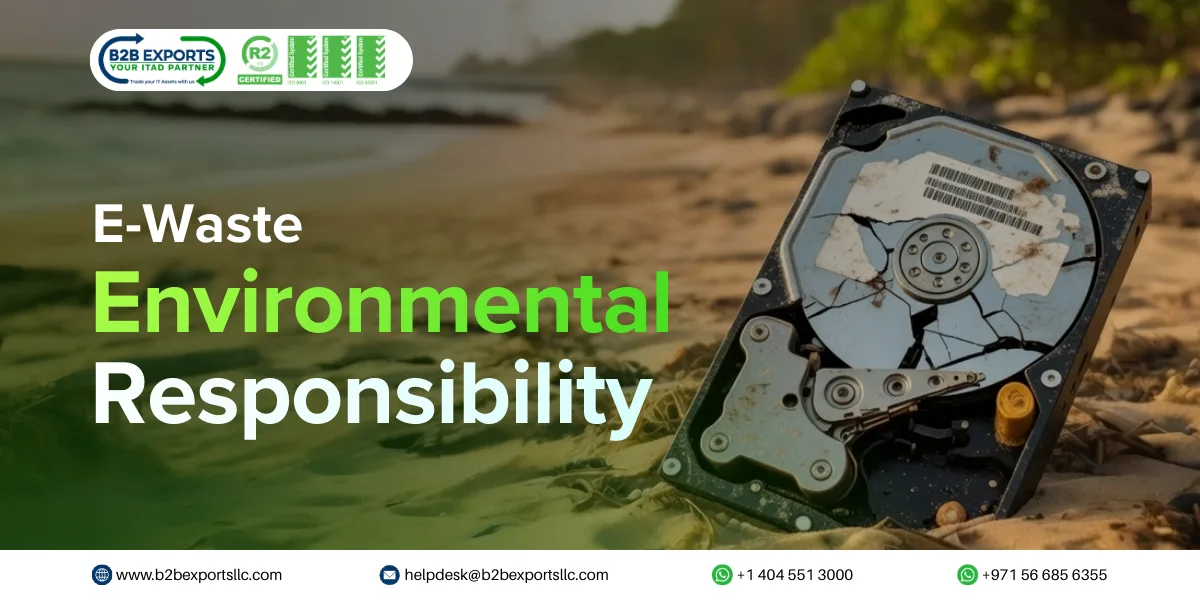
E-waste generation is also increasing across the world as companies replace technology faster and more devices are being used than ever. Enterprise IT infrastructure contributes heavily to this waste accumulation and improper disposal can cause serious damage to both health and environment. Components like circuit boards, screens and batteries can pollute the soil and water when dumped in landfills as they contain harmful materials such as lead, mercury and many other toxic substances. In addition, if electronic waste is burned without proper safety measures, it can send toxic pollutants into the atmosphere. As a result, these outcomes directly violate the commitment to sustainability and can create long-term liabilities in legal and financial areas.
Certified processes for e-waste recycling makes sure that electronic waste is handled safely and processed in an environmentally responsible manner. These certifications often require regular auditing, limit the export of harmful electronic waste to developing countries, ensure that toxic materials are handled safely and set clear recovery standards for reducing waste and conserving resources. Organisations should always check whether their IT asset disposition partners have required certifications.They should also be able to provide proof that the equipment was properly recycled and processed rather than just a receipt showing that it was collected.
The circular economy approach makes ITAD an important part of saving and reusing valuable resources. Instead of treating old equipment as waste, it rather focuses on reusing suitable devices, refurbishing parts and recovering materials. Furthermore, enterprise servers often contain precious metals in higher quantities as compared to what is found in natural ore. Recycling partners that hold necessary certifications are able to extract these materials and send them back into supply chains for manufacturing, thereby lowering the damage to the environment. In the same way, storage drives also contain rare materials, which shall be prevented from being dumped in the landfills.
Organisations are expected to share detailed information about how they manage e-waste, making sustainability reporting even more strict. Most of the reporting guidelines include expectations clearly for recycling, handling the waste and managing the product with responsibility. Companies that cannot maintain a track record of how much e-waste they are recycling, recovering or keeping out of landfills are facing a lot of pressure from investors and other stakeholders.
Final Thoughts: Making ITAD a Core Part of IT Lifecycle Management
Including ITAD into IT lifecycle management means viewing it as a regular part of operations by building an ongoing program with properly defined processes and measurable results. This approach requires strong governance where leadership owns the responsibility of disposition activities and IT asset disposition is treated as any other IT priority. Its performance must be tracked and measured through metrics, like security and uptime. Depending on one-time vendor arrangements and taking actions only when old equipment piles up can be risky.
ITAD handles old equipment in such a way that helps in managing risk and protecting sensitive information. It ensures that every asset is handled responsibly even after it stops being useful. When organisations start treating ITAD as a planned and controlled process, they are able to reduce the chances of data leakages and gain better control over their IT operations. It boosts the credibility of the organisation by proving that data protection and responsible handling of assets are considered as core priorities.
At the same time, professional ITAD services can manage the entire program in such a way that supports sustainability by ensuring that the retired equipment is put to correct practices such as reusing, recycling or disposal using certified channels. In the long run, companies that build ITAD into their lifecycle strategy will not only be able to save money through value recovery, but also develop a more secure and compliant IT environment, supporting environmental responsibility.